
Outreach and impact
Document outreach goals, the team's contribution, recruitment, and results without inflating the numbers.
Show who your helped, what your team did, and what happened afterward. Photos help readers picture an activity; attendance records, participants' work, and follow-up help explain its results.
Objectives
Decide what you want to achieve. Introducing families to , helping a new FLL team, and teaching programming need different plans and ways to measure success.
Explain why you chose the audience and activity. Mention practical choices about travel, cost, language, or equipment when they shaped the project. For Reach, show how the work helped grow FIRST.
Project records
Keep a short record of each main project:
| Part | What to write down |
|---|---|
| Goal | Who you wanted to help and what you wanted to change |
| Your role | What students, partners, and other teams each did |
| Activity | Dates, frequency, format, and materials |
| Results | Attendance, completed work, recruitment, or another useful result |
| Follow-up | Feedback, continued support, and agreed next steps |
For repeated workshops, explain what you changed after the first sessions. If you checked participants' work, show what they could do afterward. Keep the number attending separate from the number who learned a skill or joined FIRST.
Read an outreach page
Super 7's DECODE page 6 gives its main projects separate regions. A reader can distinguish the programming guide, school and community relationships, and recurring teaching activities. The preceding page supplies a broader timeline.
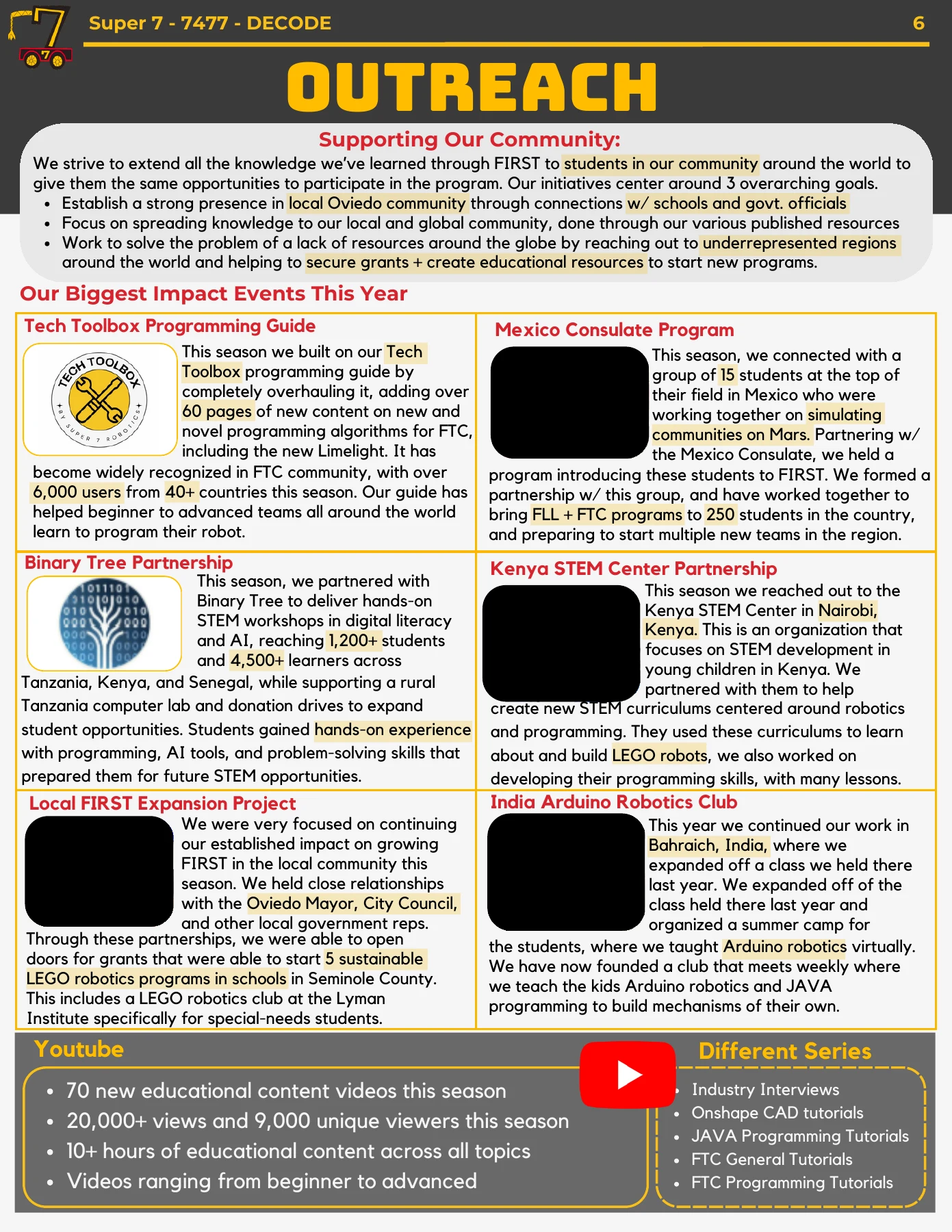
Look at how a project is introduced before its scale is discussed. Its name and purpose give the reader context for the activity and the people involved. The programming guide and a continuing class also need different explanations: one is a published resource, while the other involves repeated teaching and follow-up.
Compare this with Rebel Robotics' partnerships, described across INTO THE DEEP pages 4–7. Those pages connect schools, professionals, and regional FIRST work to the team's role. The useful writing choice is to explain what happened through a relationship, alongside the activity itself.
For your page, choose one project and answer three questions before adding a total: why this audience, what students contributed, and what changed or continued afterward. Put other activities in a short timeline if they do not need the same depth.
FIRST terminology
FIRST gives specific meanings to Started, Sustained, Mentored, Published Resources, Hosted, Supported, Reached, and Advocated. Check the definition when using one of these terms in your .
For example, mentoring means an ongoing relationship agreed with the team receiving help. Answering a question or publishing a guide is useful support, but it does not by itself mean you mentored a team. Starting a team also has conditions about formation or funding, agreement, first- support, and official participation.
When a term does not fit, say exactly what you did: delivered parts, ran two training sessions, reviewed , or helped set up an event.
Counting people
Name what each number counts. Workshop participants, video views, downloads, recruited volunteers, and teams receiving regular help are different measures.
For example, if the same twenty-four students attend three sessions, you have twenty-four participants and seventy-two session attendances.
At a public event, count people who watched or took part in your activity. The venue's total attendance is not the audience for your stand. If you estimate, explain the method and use a cautious figure.
Keep online totals separate unless you can account for overlap. The same person might watch several videos, follow two accounts, and visit a demonstration.
Keep the counting method with the number in your working records. For example, registrations may show who signed up, an attendance sheet who attended, and completed work who finished the task. Use the measure you actually collected, with its date range. If an organiser supplies a total, identify that source and your team's part in the activity.
Recruitment and lasting results
Reach includes recruiting new FIRST participants. Follow up after activities: who joined, which program or role they joined, and how your team helped them get there. Keep future plans labelled as plans.
For a published resource, include feedback or an example of another team using it. Date usage figures and say what they count. A download tells you less than an example of someone putting the resource to use.
Follow one route from activity to outcome in your records: a participant attended, requested further help, joined a program or role, and confirmed participation. Record the steps you know. An invitation, interest form, or planned team is a useful intermediate result and should keep that label until the next step happens.
Draft a project story
Write a short account of the need, the students' work, the partner's contribution, the observed result, and the next step. Place a relevant photograph or example of participants' work beside it. Give the activity's dates and frequency so the reader can tell whether it was a single session or a continuing relationship.
Ask a teammate to point to the sentence explaining your contribution. Then ask what the result actually counts. If either answer is unclear, revise the explanation before adding another photograph or headline number.
Case study or event list
Give the most space to projects you can explain well. A timeline can cover smaller activities while leaving room to describe a longer project and its results.
Rebel Robotics shows regional partnerships alongside the team's role. Super 7 combines an outreach timeline with pages about individual projects.